Eight hours into Thursday’s marathon hearing on the controversial “Stop Online Piracy Act” not a single amendment proposed by the bill’s critics in Congress had been passed.
In fact, at the time of this posting, all of the amendments introduced by House lawmakers designed to improve the legislation for critics have so far been voted down by a core of SOPA-supporters in the House Judiciary Committee, moving the controversial bill closer toward passage.
The slog was briefly bogged down even further by an unintentionally ironic controversy of decorum involving a tweet sent by Rep. Steve King (R-IA) disparaging Rep. Sheila Jackson-Lee (D-TX), reading “We are debating the Stop Online Piracy Act and Sheila Jackson has so bored me I’m killing time by surfing the Internet.”
Rep. Jackson-Lee admonished King in front of the committee, asking for him to apologize and saying she had “not heard of his ability multitask before,” but that his tweet was “offensive.” After a 20-minute period of bickering, Jackson-Lee was persuaded by colleagues to strike her use of the word “offensive” from the record.
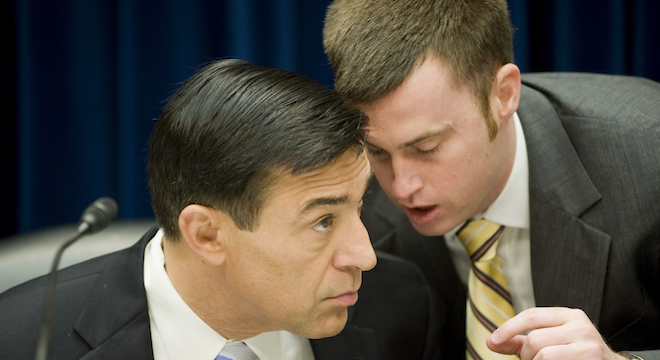
One of the major amendments designed to improve the anti-piracy legislation came in the form of a substitution from Rep. Darrell Issa (R-CA), who sought to replace SOPA with the OPEN Act he drafted in conjunction with Sen. Ron Wyden (D-OR), which would shift the power of cracking down on online piracy to the International Trade Commission, rather than the U.S. Attorney General, as SOPA calls for. The bill was voted down 22 “nays” and 12 “yays.”
Another amendment that was voted down was proposed by Rep. Zoe Lofgren (D-CA). It would have allowed ISPs to refuse takedown notices that would interfere with the security of the Domain Name System (DNS).
That bill was voted down despite the nearly hoarse pleas from Rep. Issa and another SOPA-opponent, Rep. Jared Polis (D-CO), the only member of the committee with any online technical experience.
“I would hope that this clarity would have strong bipartisan support,” said Polis, “It seems to me to be reasonable and safe.”
Issa asked the hearing’s leader and SOPA architect Chairman Rep. Lamar Smith (R-TX), why he wouldn’t support Lofgren’s amendment.
“If you could not accept this amendment, what amendment could you accept?” Issa asked.
Smith countered that Lofgren’s amendment would undermine the core of the legislation and said that there were amendments among the 50 or so remaining that he would support.
But Smith didn’t pass those amendments, either, instead asking that they be withdrawn and re-submitted for consideration after conference with his staff on how to make them acceptable to his core legislation.
Those amendments included one proposed by outspoken SOPA critic Rep. Jason Chaffetz (R-UT) that would restrict SOPA’s enforcement authority to the U.S. Attorney General or his immediate subordinates, prohibiting him from delegating it to anyone else and thus limiting the power to crackdown on pirate websites.
Smith also persuaded Rep. Lofgren to withdraw and re-submit another amendment that would remove from SOPA the requirement that an ISP block the Domain Name Resolution a foreign infringing website.
Lofgren pointed out that there are several simple methods for users to circumvent blocked Domain Name Resolutions, including typing in the actual IP address of the website or using proxy servers.
While Smith conceded that Lofgren raised good points, he encouraged her to re-submit after working with his office. Lofgren grudgingly, warily accepted noting her reservation.
“The last time I did that, during the patent reform legislation, I wasn’t contacted to work on the amendment,” Lofgren said.
Other amendments proposed by Polis, Issa and Lofgren designed respectively to: restrict SOPA from using taxpayer money to go after copyright-infringing online pornography; to remove from SOPA language that would require search engines to take down links to foreign websites; and to protect websites with user-generated content, were also handedly voted down by the Committee.
All of these amendments proposed and voted down would have improved SOPA, according to numerous critics in the House.
But with a bipartisan core of about 22 members of the 39-member House Judiciary Committee generally voting down all the amendments that critics sought, it seems as though passage of SOPA, while slow-going, is likely.
Just after 6:30 p.m., Chairman Smith steeled lawmakers for a long, laborious night of mark-ups.
“I’ve been asked two recurring questions about this hearing,” Smith said. “How late are we going and will dinner be provided. The answer is late and yes.”
The hearing resumes again on Friday morning. Stay tuned.