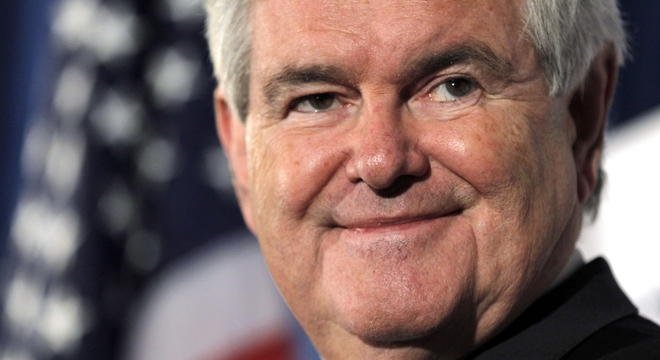
On paper, Newt Gingrich has a perfectly tailored pitch to Florida Republicans and the momentum to take advantage of his natural appeal. In practice, the state may be a stretch.
First the bad news: Newt may be peaking too late to exploit his recent surge.
Many Florida residents have already cast their vote in a state where a large percentage of primarygoers either vote early or by absentee ballot. According to the state GOP, about 200,000 votes are already counted and more than 470,000 absentee ballots have been requested overall. Total turnout is expected to crack 2 million. That means it’s possible a significant chunk of the electorate cast their vote before Gingrich’s out-of-nowhere surge, when Romney was leading the state by a huge margin in polls.
Democrats, who have been eagerly raising Romney’s expectations in each primary state in the hopes of a drawn out primary, are already touting the absentee ballot issue as a warning not to expect an outright Gingrich win.
“SC results may have an impact but it is mathematically impossible for Gingrich to win FL with absentee ballots in,” Bill Burton, co-founder of Democratic Super PAC Priorities USA, said on Twitter.
David Bossie, president of Citizens United and a longtime friend of Gingrich, suggested Gingrich might be more competitive that the absentee numbers suggest.
“I’m not worried about it,” Bossie said. “[Early voters] tend to be conservatives. Establishment Republicans don’t tend to vote in high numbers that way, it’s really the conservative activists, the Ron Paul types, who are most anxious to make sure they support their candidates. We’ll see where it shakes out but Florida is a big state for Newt.”
Another major hurdle is money. Florida is an expensive state to run ads in and a large state to manage, and Romney will have a big advantage in terms of cash and organization. Gingrich acknowledged in his victory speech on Saturday that the disparity would be significant.
“We proved here in South Carolina that people power with the right ideas beats big money and with your help we’re going to prove it again in Florida,” he said.
Now the good news. He’s spent years honing his message to exactly the demographics that are key to success in the Sunshine State: Latino voters, elderly voters, and pro-life voters.
Convinced the GOP needs to make inroads with Hispanic Americans to be competitive , Gingrich has made outreach to the community a top priority for years and he’s kept it up in the presidential election even while anti-immigration sentiments still run high among primary voters. Whereas Romney has tacked right on immigration issues throughout the campaign, Newt plays up his opposition to mass deportations, he’s run a Spanish language (albeit barely read) Twitter feed for years, and he regularly holds Latino-focused town hall events and interviews with Spanish-language media. Already, he’s up with Spanish radio ads in Florida accusing Romney of being “anti-immigrant” and referencing a 2008 flub in which he accidentally used one of Fidel Castro’s trademark lines while delivering remarks to Cuban voters.
Newt’s first November/December surge included a disproportionate boost from elderly voters, which was not a coincidence: he’s made a concentrated effort to secure their support by name-checking Alzheimer’s research, deriding Paul Ryan’s voucher plan as “right wing social engineering,” and alluding to their favorite Obama chain e-mails.
As for the latter, Gingrich has been working in recent weeks to exploit doubts among evangelical voters about Romney’s late-in-life conversion to the pro-life cause. In South Carolina, he ran ads accusing Romney of governing “pro-abortion” in Massachusetts.
And if the first three primaries and the wild swings in the polls along the way are any indication, huge chunks of the electorate are still very much up for grabs. Among voters still left to hit the polls in Florida, Gingrich’s momentum could go a long way.
Richard Spalding, a retiree in Central Florida, told TPM on Saturday that he was leaning Gingrich after watching the latest debate, but would be much more confident in his vote if he secured a South Carolina victory.
“It demonstrates a degree of winnability that maybe hasn’t been evident,” he said.