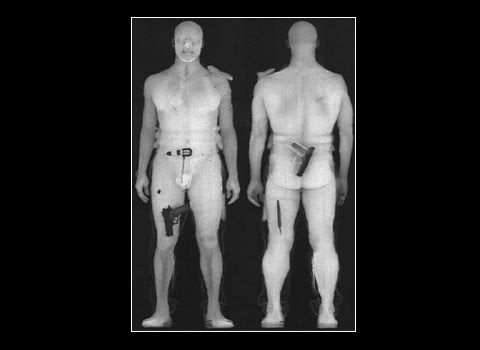
It’s pretty hard to find any part of the terrorism story that isn’t suffused and tainted by partisan politics. But one example that keeps coming back to me is this example of the “backscatter” body scanners which would dramatically increase security but also, allegedly, create unacceptable intrusions into personal privacy.
Now, I’m not sure, either on the privacy side or on the effectiveness side, whether we should be using these scanners on all flights or perhaps all flights coming into the USA.
But what is pretty clear to me is the disconnect on the question that I see in the public debate.
We’re willing to ethnically profile, do all sorts extra-judicial surveillance, maintain massive databases of hundreds of thousands of people who have some vague relationship to extremism, torture captives, condemn people to hours unable to go the bathroom on planes, even launch various foreign military adventures, but when it comes to submitting to a quick scan that might show a vague outline of boobs or penises (almost certainly no more than is exposed in most bathing suits), that’s a bridge too far.
Something about that doesn’t compute to me. And what I like about this is that there’s no clear partisan division on this one. Everyone seems to agree. It just tells me that at some level we’re not really serious about this.



Wow, this is getting pretty bad for the National Review and Marc Thiessen. Thiessen of course said that we tried Richard Reid in a regular American court since that was “long before we figured out that we had other options than handing him over” to law enforcement. But as TPM Reader RM points out, President Bush okayed military tribunals a month before Reid tried to blow up the plane. Read More
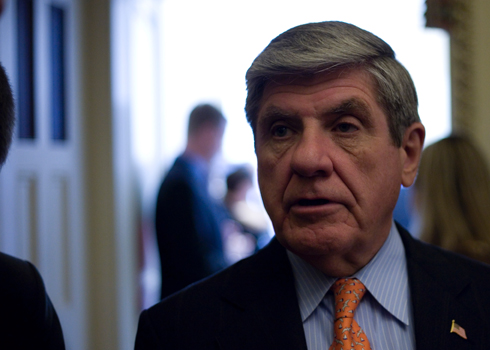
Sen. Ben Nelson (D-NE) is airing a 30-second TV ad during tonight’s Holiday Bowl between the Nebraska Cornhuskers and the Arizona Wildcat to defend his support for health care reform.
From TPM Reader MF …
Thiessen’s explanation is preposterous even on its own terms. Per their respective Wiki entries, Reid was arrested on December 22, 2001, after trying to bring down AA flight 63. Padilla was arrested on May 8, 2002, and was (in Theissen’s words) “taken out of the criminal-justice system, declared an illegal enemy combatant, and transferred to the Charleston brig for interrogation” on June 9, 2002. Reid remained in the civilian criminal sytem through his January 2003 guilty plea in a Boston federal court.
Following Thiessen’s “logic,” the US had clearly “figured out that we had other options than handing [terrorists] over to law enforcement” as of June 9, 2002, the day Padilla was sent to military prison. Why couldn’t the government have likewise “taken [Reid] out of the criminal-justice system” during the seven months between June 2002 and Reid’s guilty plea in January 2003?
It just makes no sense.