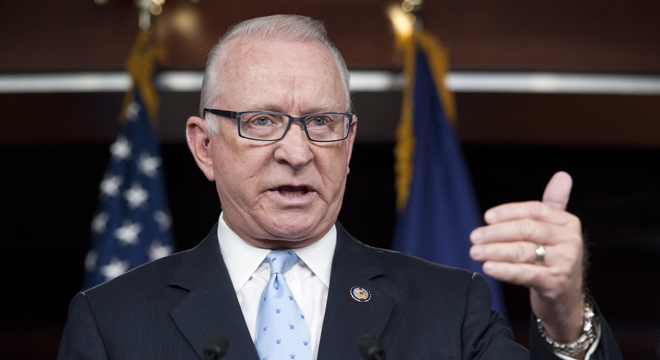
The Republican and Democratic chairmen of the House and Senate defense committees are pleading with the deficit-reduction super committee to spare the Pentagon when it’s looking for places to slash spending.
Both Rep. Buck McKeon (R-CA), who chairs the House Armed Services Committee, and Sen. Carl Levin (D-MI), who heads the Senate counterpart, sent letters to the super committee Friday urging, if not downright begging, the 12 deficit deciders not to touch the Pentagon’s discretionary budget, although Levin suggested the panel propose a commission to look into finding savings in the military retirement and health care systems.
“While the Joint Select Committee must concern itself with the enormity of the federal debt, the Armed Services Committee is charged with assuring America’s military can defend the nation against a multitude of growing threats,” McKeon wrote. “We believe that additional reductions in the base budget of the Department of Defense will compound deep reductions Congress has already imposed and critically compromise nationally security. We urge you to refrain from any further cuts in National Defense.”
Members of Congress’ primary concern is keeping jobs in their districts so it’s hardly surprising that neither one offered up a single Pentagon program or defense contract for the chopping block.
McKeon also cautioned the deficit-reduction committee to handle any cutting of service member benefits, as the country “asks more of current and future military retirees than the general population.”
“Military lifestyle and career demands are radically different than any private sector of government civilian endeavor,” he added. “The retirement and health care systems that support the military community should reflect that reality.”
Levin, however, said he supports President Obama’s proposal to impose new costs on military retirement and health systems. He also argued that the super committee should look at “all aspects of military compensation,” including the current system of basic pay, allowances (including the housing allowance), special and incentive pays, and health care, as well as the tax treatment of the various components of military pay.
“I agree with the President’s statement, echoed by both Secretary Gates and Secretary Panetta, that in order to avoid breaking faith with the force, any changes to military retirement should grandfather current service members,” Levin said.